June 24, 2026
More details ↓
As rattlesnake master flowers reach peak bloom in mid-summer, brown-belted bumble bees become its primary pollinator, a critical relationship for both this threatened plant and the bees that depend on its nectar during breeding season.
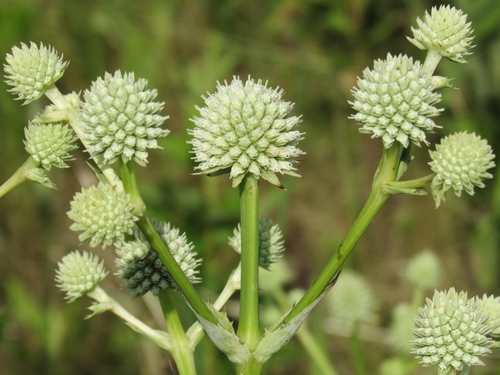
In the open edges and disturbed prairies near Athens, where the canopy breaks and the sun hits ground level for most of the day, a plant is blooming right now that most people walk past without recognizing as a wildflower. Rattlesnake master grows to chest height or taller, with rigid, bluish-green leaves edged in fine teeth, and it holds its flowers in dense spherical heads, each one about the size of a golf ball. The whole plant has the look of something that belongs in a desert — stiff, pale, armored — and it does have relatives in dry prairies farther west. Here in Ohio, it occupies a narrow range of habitats: open ground, prairie remnants, rocky glades. It is a threatened species in this state, and the stands near Athens represent exactly the kind of isolated population that depends on consistent pollination to persist.
The brown-belted bumble bee is the animal doing most of that work right now. This is a mid-sized bumble bee, the queen noticeably larger than her workers, and she is identified by the brown or tawny band across the abdomen, set below the yellow of the thorax. Workers are out in force during the breeding season peak, foraging from early morning until the heat of the afternoon. On rattlesnake master, they work methodically, moving from one spherical flower head to the next. Each globe is actually composed of dozens of tiny individual flowers packed tightly together, and a bee will work across the surface of one head for several seconds before moving on, collecting both nectar and pollen. The pollen loads visible on the hind legs of returning workers can be pale yellow to nearly white, which is consistent with rattlesnake master's pollen color. If you are near a blooming plant right now, watch the flower heads closely — a foraging worker will hold to the surface and probe repeatedly before lifting off.
Rattlesnake master offers something relatively rare in mid-summer: a reliable nectar source during a period when many spring wildflowers have finished and fall composites have not yet opened. This gap in the floral calendar is a genuine challenge for bumble bee colonies, which are at their largest and most demanding point in the season. The queen has been laying eggs for weeks, the colony has reached peak population, and workers are ranging farther and working longer to meet the demand. A plant like rattlesnake master, which holds its bloom for several weeks and presents accessible flowers to any bee with the reach to probe them, becomes a meaningful resource. The relationship is not exclusive — other bees, wasps, and beetles visit the flower heads too — but brown-belted bumble bees are consistent visitors, and their size and foraging behavior make them effective pollinators. They contact the anthers and stigmas reliably as they move across the surface of each head.
The threatened status of rattlesnake master in Ohio reflects the loss of the open habitats it requires. Prairie remnants have been reduced to fragments, and many of those fragments are under pressure from invasive plants. Poison hemlock, which is present near Athens in significant numbers, and purple crownvetch, also invasive here, both establish densely in the disturbed open ground that rattlesnake master also occupies. Where those invasives close in, the rattlesnake master loses the light and space it needs. Smaller plant populations mean fewer flowers, and fewer flowers mean less reliable pollination for a species that cannot afford reproductive failure in an already restricted range. The brown-belted bumble bee is not in crisis the way some of its relatives are — it remains one of the more common bumble bees in the eastern United States — but it does depend on a landscape that offers flowering plants across the full summer season, and that landscape is increasingly patchy. The two species need the same thing: open ground that holds native plants through the summer.
The flower heads of rattlesnake master catch the midday light and hold it. They are pale enough to be visible from a distance, almost luminous against the green of surrounding vegetation. Somewhere nearby, if the plants are in reach, you can probably hear the low hum of a foraging bee before you see it.
