June 26, 2026
More details ↓
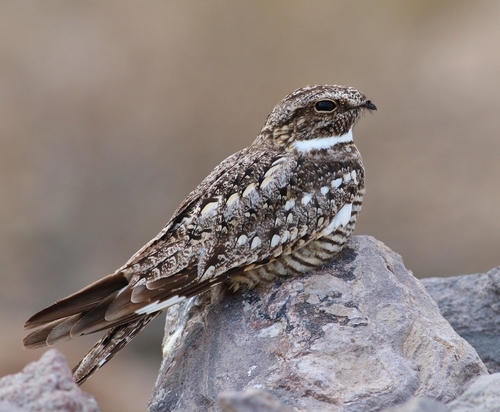
As the longest days of summer arrive, Lesser Nighthawks emerge at dusk to hunt aerial insects over the desert, their erratic flight and distinctive calls marking the transition from day to night across the Sonoran landscape.
The heat at Deer Valley holds well past sundown in summer. The rocks and bare soil that absorbed it all day release it slowly, and the air above the desert floor stays warm and dense long after the light is gone. That warm layer is where the insects are, and where the nighthawks come.
Lesser Nighthawks are birds of the open desert, built for low, unhurried flight in dim light. They are small, roughly the size of a large thrush, with long swept wings marked by a pale bar that flashes as they turn. They are not fast hunters. They quarter back and forth across open ground at ten or fifteen feet, mouths open, taking insects as they come. The mouth is the key feature here: it opens wide, flanked by stiff bristles that help funnel prey inward, and the bird simply flies through concentrations of airborne insects. Midges, moths, flying ants, termites on their mating flights, small beetles lifted off the ground by the residual warmth — all of these go in. The nighthawk does not stoop or chase. It works the air the way a baleen whale works the water, moving through density.
Summer is when this strategy pays off most. The longest days of the year push insect activity toward the margins of the day — early morning and, especially, dusk, when temperatures drop just enough for flight but the air is still warm. Termite swarms often emerge in the weeks following the first monsoon moisture, and flying ants time their mating flights to these same conditions. The nighthawk's own breeding season lines up with this abundance: females are on eggs or tending young right now, and the males hunt through the long twilight, sometimes well into full dark. They nest on bare ground, in the shade of a cholla or at the base of a saguaro, with no nest structure at all — just a scrape, or nothing. The eggs are cryptically marked and nearly invisible against gravel.
The call is how most people first encounter them. It is a soft, nasal trill, almost mechanical in its evenness, repeated as the bird flies. If you are outside near Deer Valley as the light goes flat and you hear something that sounds like a small motor idling somewhere overhead, that is likely a nighthawk. The sound carries well in still air. The birds are often heard before they are seen, and once your eyes adjust you may pick out the pale wing bars tilting against a darkening sky. They are not solitary hunters — where insects concentrate, several birds may work the same patch of air, crossing each other's paths without conflict.
They share the dusk with other species, though not always comfortably. The ornate tree lizards that spent the afternoon on sun-warmed rocks are retreating now, and the western diamond-backed rattlesnakes that wait near rodent trails are becoming active. Mourning doves and white-winged doves settle into mesquite to roost, their soft calls dropping off as the light fades. The nighthawks move into the space the diurnal birds vacate. The velvet mesquite is in fruit right now, and that fruit draws insects that draw more insects; the understory around those trees can be a productive hunting ground after dark.
The nighthawks will be here until late summer, then gone. They are long-distance migrants, wintering in South America, and they leave before the desert fully cools. For now, though, they are part of the nightly transition at Deer Valley, the birds that mark the exact moment when the day shift ends and the night shift begins.
Look west if the sky is still pale where you are. The nighthawks fly low against the horizon first, then work higher as darkness fills in. The wing bar catches whatever light remains.
