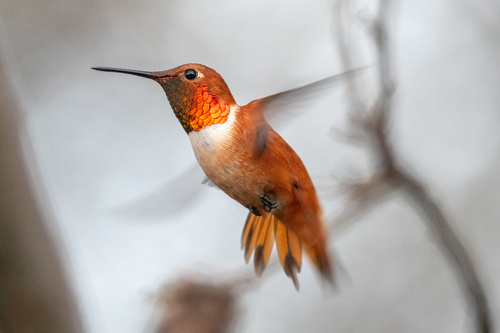
Rufous hummingbirds and early summer flowers
June 11, 2026
0:000:00
More details ↓
As rufous hummingbirds arrive to breed in early summer, they encounter a landscape of newly opened flowers—oceanspray, Nootka rose, and honeysuckles—timing their presence with peak nectar availability in the longest days.
Transcript
The morning light filters through Douglas-fir branches near Bellingham, where the forest edge opens to reveal clusters of cream-white oceanspray flowers and the bright pink blooms of Nootka rose. The air carries the sweet scent of nectar and the soft hum of wings beating faster than the eye can follow. These are the longest days of the year, and the timing is no accident.
A rufous hummingbird hovers before an oceanspray bloom, its copper-colored back catching the early light. The bird's needle-thin bill probes deep into the tiny flowers that cluster in foam-like sprays at branch tips. Each flower holds a small reservoir of nectar, and the oceanspray's timing aligns precisely with the hummingbird's arrival for breeding season. The rufous hummingbird migrates north from wintering grounds in Mexico, reaching the Pacific Northwest just as these native shrubs burst into bloom. The bird's presence here is fleeting. Unlike the year-round Anna's hummingbird that also visits these flowers, the rufous hummingbird will stay only through the breeding season before beginning its southward journey in late summer.
The relationship extends beyond oceanspray to a constellation of native flowers that bloom in sequence through early summer. Nootka rose opens its five-petaled pink flowers along forest edges and clearings, offering nectar to the hummingbirds while depending on various pollinators for reproduction. The invasive poison hemlock also blooms now in disturbed areas, but its white umbrella-shaped flower clusters serve different pollinators entirely. Native honeysuckles add to the nectar corridor. Orange honeysuckle unfurls its trumpet-shaped blooms in brilliant orange and red, colors that signal to hummingbirds from a distance. Twinberry honeysuckle produces paired yellow flowers that will later become black berries. Each species times its flowering to capture pollinators when they are most abundant and active. The hummingbirds, in turn, have evolved to arrive when this nectar buffet reaches its peak.
The rufous hummingbird's energy demands are extraordinary. Its heart beats over 1,200 times per minute during flight, and it must visit hundreds of flowers each day to fuel this metabolic intensity. The bird's relationship with these early summer bloomers represents a precise ecological synchrony. The flowers provide the concentrated energy source the hummingbird needs for courtship displays, nest building, and feeding young. In return, the bird transfers pollen between flowers as it feeds, its forehead and throat feathers picking up and depositing the fine grains. This partnership has shaped both the timing of migration and the flowering schedules of these native plants. Listen for the distinctive buzz of rufous hummingbird wings, higher-pitched than the Anna's hummingbird, as it moves between the oceanspray clusters and rose blooms in the warming morning air.