
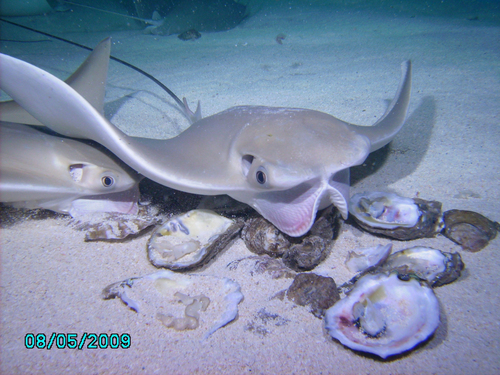
Cownose rays move through summer shallows
June 11, 2026
0:000:00
More details ↓
The seasonal inshore migration of cownose rays into Florida's coastal waters during summer, a mass movement of a vulnerable species seeking warm shallow nurseries and prey.
Transcript
The water along Palm City's coast carries a different weight in summer. Warmer currents push inland, and with them come the cownose rays, their diamond-shaped bodies moving through the shallows like living kites beneath the surface. If you are near the water now, watch for the ripples that seem to move against the current, the gentle disturbances that mark their passage.
Cownose rays arrive in these coastal waters as the temperature climbs, following ancient routes that bring them to the warm nursery grounds they need. Their flattened bodies, nearly three feet across at full size, undulate through water barely deep enough to cover their backs. The name comes from their blunt snouts, cow-like when seen head-on, but from above they are pure grace. These rays are vulnerable now, their populations pressed by fishing pressure and habitat loss, making their summer presence here both precious and precarious.
They come for the oysters and clams buried in the sandy bottom, using their crushing teeth to crack shells that would stop most predators. A single ray can process dozens of mollusks in a feeding session, its powerful jaws working like a biological nutcracker. This feeding shapes the entire benthic community. Where cownose rays forage, they turn over sediment, aerating the bottom and creating opportunities for other species. Small fish follow in their wake, picking up disturbed invertebrates and organic matter stirred from the substrate. The rays become ecosystem engineers, their feeding behavior creating habitat for others even as they search for food themselves. Their presence connects the water column to the seafloor, moving nutrients upward and oxygen downward with every sweep of their wings.
The summer aggregations can number in the hundreds, sometimes thousands, as rays gather in the productive shallows. Pregnant females seek the warmest water, where their developing young can grow faster and stronger. The pups, born live after nearly a year of development, arrive ready to hunt small crustaceans and worms. But the same shallow waters that provide nursery habitat also make the rays visible to predators. Bull sharks patrol these same areas, and the great hammerheads that cruise the deeper channels will venture inshore when the opportunity presents itself. The rays' defense is in numbers and vigilance, their eyes positioned to scan both above and below as they feed.
Listen now to the water around you. Summer brings more than warmth to these coastal shallows. It brings the ancient rhythms of creatures that have navigated these routes for millennia, following temperatures and prey abundance with precision that puts our weather forecasts to shame. The gentle splash of a ray's wingtip breaking the surface, the soft disturbance as it settles back to the bottom, the way the water moves when something large and graceful passes just beneath. These sounds carry the weight of summer itself, the season when the ocean's living wealth moves closest to shore.